


Your Car Is a Network. Treat It Like One. There's a mental model that most people — and honestly, a lot of older-school technicians — still use when thinking about car problems. A part fails. A sensor reads the failure. A code is set. You replace the part. That model made sense for vehicles with a handful of electronic systems loosely connected by simple wiring. It doesn't make sense for a 2022 vehicle with 80 electronic control units all talking to each other simultaneously over multiple communication networks. Understanding CAN bus diagnostics isn't just an academic exercise. It is increasingly the difference between finding the real cause of a problem and spending hours chasing symptoms while the actual fault sits quietly in a network error log. What CAN Bus Actually Is CAN stands for Controller Area Network. It is a communication standard developed by Bosch in the 1980s that became the dominant networking protocol for automotive electronics and has been required in all US vehicles since 2008. The basic idea is elegant: instead of running a dedicated wire from every sensor and actuator to a central computer, CAN allows multiple electronic modules to communicate over a shared two-wire bus. Each module can send and receive messages. Each message has an identifier that tells other modules whether it's relevant to them. Think of it like a group text message. Every module on the bus 'sees' every message, but each module only responds to the messages that matter to its function. A Simple Example When you press the brake pedal, the brake pedal position sensor sends a message on the CAN bus. The engine control module reads it and adjusts fuel delivery. The transmission control module reads it and prepares for a downshift. The stability control module reads it. The instrument cluster reads it and prepares to illuminate a brake light. All of this happens in milliseconds over the same two wires. Now imagine a fault on those two wires. Or a module that's sending malformed messages. Every system that depends on brake pedal information can start behaving incorrectly — and the codes generated might appear in five different modules, each of which is actually fine. The problem is the network, not the modules. The Layers: CAN, LIN, and Now Automotive Ethernet CAN isn't the only network in a modern vehicle. Different systems use different protocols depending on the speed and volume of data they need to handle. CAN Bus The workhorse. Two speeds: high-speed CAN (up to 1 Mb/s) handles powertrain and chassis systems where timing is critical. Lower-speed CAN handles body systems like windows, mirrors, and seat controls where latency isn't as critical. Most modern vehicles have multiple CAN networks running simultaneously. LIN Bus Local Interconnect Network is simpler and slower than CAN, used for systems that don't need high-speed communication — steering column controls, individual seat adjustment motors, some sensor clusters. LIN devices report to a 'master' module that speaks CAN, so they're often invisible to a scanner that's only looking at the CAN network. Automotive Ethernet Increasingly common in high-end and newer vehicles for systems that need very high bandwidth — cameras, radar, LiDAR in ADAS-equipped vehicles, infotainment systems with large data throughput. Automotive Ethernet can handle hundreds of megabits per second. Diagnosing faults on these networks requires equipment and knowledge that most shops don't yet have, but it's coming fast. How CAN Bus Faults Actually Manifest This is where it gets practically important for both technicians and car owners. A CAN bus fault rarely looks like a CAN bus fault from the outside. What you see instead are: Multiple unrelated codes across different systems simultaneously Modules that 'wake up' intermittently or not at all Complete loss of communication with a module that tests fine when disconnected and bench-tested Bizarre or erratic behavior in multiple unrelated systems at the same time A module that works correctly alone but fails when connected to the vehicle network The Termination Resistor Problem CAN bus networks require termination resistors at each end of the bus to prevent signal reflection — essentially, the electrical equivalent of echo. These resistors are typically 120 ohms each, creating a parallel resistance of 60 ohms across the network. A technician who knows to measure the resistance between the CAN high and CAN low wires at the OBD-II port can quickly determine whether both terminators are present and healthy. A reading of 120 ohms instead of 60 means one terminator is missing or open. A reading far from 60 means a short or additional resistance somewhere on the bus. This simple test takes about 30 seconds with a multimeter. It can immediately determine whether the CAN bus itself is healthy — before spending hours chasing module faults. Network-Level vs. Module-Level Diagnostics Traditional diagnostic thinking is module-centric: identify which module set the code, test that module, replace if faulty. Network-level diagnostic thinking is topology-centric: map how the modules communicate, test the health of the communication pathways, then look at individual modules. The difference matters because: A healthy module on a sick network looks like a sick module Replacing modules that aren't actually failed is expensive and often doesn't fix the problem Network faults — shorts, opens, interference — are often cheaper to repair than the modules they mimic Tools That Enable Network Diagnostics Oscilloscopes — specifically, good digital storage oscilloscopes — are the primary tool for CAN bus analysis. The CAN waveform has specific voltage levels, timing characteristics, and bit patterns that reveal network health at a level no scan tool can show. A scope can identify whether: Signal voltage levels are within spec Rise and fall times are correct (indicating proper termination) Bit timing errors are present Specific nodes are dominating the bus (a sign of a module in error mode) Good scan tools can also show network communication in real time — listing which modules are online, which aren't responding, and any communication errors being logged. This network map is often the fastest way to identify where a CAN bus problem actually lives. What This Means for You as a Customer You don't need to understand CAN bus architecture to care about whether your shop does. Here's a simple test: if your car has multiple fault codes across unrelated systems, or if a problem keeps returning despite module replacements, ask your shop whether they've tested the communication network rather than individual components. A shop with network-level diagnostic capability will know immediately what you're asking about. A shop without it may look puzzled — which tells you something important about where your repair money is about to go. Frequently Asked Questions Does every car have a CAN bus? All US vehicles from 2008 onward are required to have CAN bus communication for emissions-related systems. Most modern vehicles have expanded this to cover nearly all electronic systems. Some older vehicles (pre-2008) have earlier communication protocols that function similarly but require different diagnostic approaches. Can a bad battery cause CAN bus problems? Yes, significantly. CAN bus communication depends on stable voltage levels. A weak battery or failing alternator that creates voltage spikes or drops can cause CAN communication errors that generate codes in multiple modules. Checking charging system health is often the first step when multiple unrelated codes appear suddenly. Why would a module 'not be on the network' if it's physically plugged in? A module can be physically connected but not communicating if it has lost power, lost its ground connection, has an internal failure, or is in error mode due to a previous fault. It can also appear to be absent if the wiring between it and the bus has an open circuit even with the connector seated. Is CAN bus the same thing as OBD-II? No. OBD-II is a diagnostic access standard that defines what data must be available and how to access it. CAN bus is one of the physical communication protocols used to carry that data. OBD-II access happens over CAN on most modern vehicles, but they're separate things. The Bottom Line Vehicles have been rolling networks for years, but the diagnostic industry has been slower to adopt truly network-level thinking than the vehicles themselves have been to implement it. The shops that understand this — that have oscilloscopes, trained technicians, and the discipline to test the network before chasing individual modules — are the shops that will solve the problems others can't. We've made that investment because we believe our customers deserve it. If your car has confounded other shops, the answer might not be in any individual module — it might be in the network connecting all of them.

The False Confidence of a Clean Report 'Clean CarFax.' It's one of the most reassuring phrases in a used car listing. It implies a straightforward history — no accidents, no flood damage, no salvage title. Buyers see it and exhale. The problem is what 'clean CarFax' actually means: no reported accidents or incidents captured by the specific data sources CarFax licenses. It does not mean no accidents. It does not mean the vehicle is in good condition. How Vehicle History Reports Work — and Where They Break Down CarFax and AutoCheck aggregate data from insurance records, DMV title records, auction records, dealer service records, and police reports. When data flows correctly from these sources to the VIN, the report is informative. The gaps are significant: Private Party Accidents When two individuals handle an accident directly without filing an insurance claim — common in minor fender benders — no insurance record is created and nothing appears in any history report. Industry estimates suggest 20–35% of accidents are handled this way. Every one is invisible to CarFax. Code Clearing Before Sale Vehicle history reports don't capture what's in a vehicle's computer. A seller who clears fault codes the day before listing creates no record of what existed. This is completely undetectable from a history report. Deferred Maintenance Nothing about maintenance history appears in a vehicle history report unless performed at a dealer who submits records — which is voluntary and inconsistent. A vehicle with every oil change done at an independent shop, by the owner, or not at all will show identical history results. What Actually Reveals Vehicle History Physical Evidence of Collision Repair A trained technician can identify prior collision repair that didn't make any database. Paint overspray, uneven body panel gaps, mismatched paint texture, replaced panels with slightly different sheen, new welds in areas that shouldn't have them — these tell the story the report missed. This is skill-based, not database-based. OBD Readiness Monitor Status Multiple incomplete readiness monitors at purchase time warrant investigation — it suggests codes may have been recently cleared. It doesn't prove problems, but it's a reason to ask questions. Fluid Condition What the oil looks like, what the coolant pH is, what the transmission fluid smells like — these tell you more about actual maintenance history than any service record. A vehicle with 60,000 miles and black, sludgy oil has not been cared for, regardless of what the history report shows. The Odometer Problem Electronic odometers are harder to tamper with than mechanical ones, but odometer fraud hasn't been eliminated. Physical wear indicators — seat bolster wear, steering wheel surface, pedal rubber condition, door panel wear — tell you how many miles a vehicle has actually seen in a way an odometer reading alone cannot. The Washed Title Problem Salvage titles show up reliably in history reports. Washed titles — created by moving a salvage vehicle through a state that doesn't track salvage history — do not. These vehicles look clean in a report. They're not. Physical inspection of frame structure, repair evidence, and panel gaps are the detection tools a history report can't replace. Frequently Asked Questions If CarFax is so limited, why do dealers emphasize it so much? Because it's a positive-sounding credential that satisfies buyer psychology and is easy to obtain. A clean CarFax is a marketing statement, not a mechanical guarantee. Dealers know this. Most buyers don't. Can I check if a VIN has been reported stolen? Yes. NICB (National Insurance Crime Bureau) offers a free VIN check for theft and salvage records at nicb.org. Worth running on any significant used car purchase in addition to standard history reports. What's the most important thing history reports miss? Evidence of prior accident repair — particularly structural repair — that didn't generate an insurance record. Uneven panel gaps, mismatched paint texture, evidence of non-factory welding, and replaced panels that aren't quite factory fit are what experienced technicians find during a pre-purchase inspection that no database can catch.

Missouri winters attack your car in ways you don't notice until they matter. At Quality Auto Repair & Auto Sales, we include an underbody inspection as part of our multi-point check at every service visit.

The $150 Service That Can Save You $5,000 You found a car. The price is right, the CarFax looks clean, the seller seems honest. You're ready to buy. There's one step with the highest return on investment of anything in this process, and most buyers skip it: a pre-purchase inspection (PPI) by an independent mechanic — not the dealer, not the seller, not a friend who knows a little about cars. What a PPI Actually Covers Full road test evaluating brakes, transmission shift quality, steering, noise and vibration Underbody inspection on a lift — frame condition, brake lines, fuel lines, suspension, exhaust, collision damage evidence Engine bay — fluid conditions, leaks, coolant condition, belt and hose condition Brake component measurement — pad depth and rotor thickness on all four corners Tire tread depth and wear pattern analysis OBD-II diagnostic scan including stored codes, cleared codes, and readiness monitor status Exterior inspection for repainted panels or bodywork suggesting accident history The OBD Readiness Monitor Check Every OBD-II vehicle has readiness monitors — self-tests the engine management system runs to verify emissions components are functioning. When a battery is disconnected or codes are cleared, these monitors reset to 'not ready.' Multiple incomplete monitors at purchase time suggests codes may have been recently cleared. A technician performing a PPI flags this immediately. What CarFax Misses Private-party accidents not reported to insurance — industry estimates suggest 20–35% of accidents are handled this way Deferred or missed maintenance Developing mechanical problems Code clearing before the sale Odometer or title manipulation in certain scenarios 'No reported accidents' and 'no accidents' are categorically different statements. A CarFax reflects what was reported and recorded — not the vehicle's actual condition. How to Arrange a PPI Choose an independent shop not affiliated with the dealer or seller Call ahead to confirm they perform PPIs and ask about timing and cost (most run $100–$175, 1–2 hours) Be present if possible — a good technician will walk you through the vehicle on the lift Get a written report, not just a verbal summary What to Do With the Findings A PPI on a vehicle over 80,000 miles rarely comes back completely clean. Use the findings as a negotiating tool — $1,200 in needed work is a legitimate basis for renegotiating price. A seller who refuses to allow a pre-purchase inspection should trigger immediate concern. There is no legitimate reason for an honest seller to resist an independent evaluation. Frequently Asked Questions Can I ask a dealer to let me take the car to an independent shop? Yes, and you should. Most reputable dealers will allow this. If a dealer flatly refuses, treat that as a red flag. Is a PPI worth it on a cheaper car? Especially on a cheaper car. A $5,000 vehicle with $3,000 in deferred problems is an $8,000 purchase. The $150 inspection fee is proportionally more valuable at lower price points. The Bottom Line A clean inspection builds confidence. A problematic inspection protects you from an expensive mistake. Either outcome is worth $150. Quality Auto Repair & Auto Sales performs pre-purchase inspections for vehicles bought through us and for vehicles you're considering elsewhere. Our job is to give you an honest picture of what you're buying.

The Repair That Never Seems to Stick You've been to three shops. You've replaced the battery. You've replaced the alternator. You've replaced a wheel speed sensor. You've replaced a body control module. The weird electrical symptoms keep coming back — different forms, same underlying chaos. Random warning lights. Gauges that read incorrectly. A radio that resets itself. Windows that work on some days and not others. A transmission that shifts erratically without any transmission codes. Features that work fine during the day and fail at night when the lights are on. If this sounds familiar, there's a good chance nobody has checked your grounds. What a Ground Actually Does Electricity flows in circuits — power goes out, does work, and returns through a ground path back to the battery's negative terminal. Every electrical component in your vehicle needs both a power supply and a return path to function. The return path is the ground. In a perfect world, every ground connection would be a low-resistance direct path back to the battery. In the real world, ground connections are: Metal-to-metal connections that corrode over time Bolted to vehicle body panels that rust Exposed to heat, vibration, and moisture Sometimes inadequately installed from the factory Shared among multiple circuits, meaning one bad ground can affect several systems When a ground connection develops resistance — through corrosion, loosening, or damage — current doesn't flow cleanly back to the battery. Instead, it finds alternative return paths through other circuits, other grounds, or other components. This is called a ground offset, and it creates electrical chaos. Why Ground Faults Are So Consistently Misdiagnosed The fundamental reason is measurement error. Most electrical diagnostics begin with a voltmeter checking whether power is present at a component. If 12 volts is at the component, the technician often concludes the component has power and moves on. But a component with 12 volts and a bad ground may have no functional voltage at all. Voltage is measured between two points — the power supply and the ground reference. If the ground reference itself has resistance, the voltage reading at the component is inaccurate. The component might have 12 volts on its power pin but 8 volts on its ground pin due to resistance in the ground circuit — giving it only 4 volts of actual working voltage. The Backprobe Technique Proper ground testing requires measuring voltage drop across the ground circuit under load — not measuring voltage at the component with the circuit open. A ground connection might measure 0 volts difference at rest and still have enough resistance to cause significant voltage drop when current is actually flowing through it. The correct test: put a known load on the circuit (turn on whatever component the ground serves), then measure the voltage between the ground pin at the component and the battery's negative terminal while the load is active. Any reading above 0.1 to 0.2 volts indicates a ground with excessive resistance. This is not how most quick diagnostics are performed. It requires knowing to test it, knowing how to test it correctly, and having access to wiring diagrams that show exactly where the ground connects. Common Ground Fault Symptoms by System Engine and Transmission Poor grounds to the engine block or transmission case can cause: erratic idle, false oxygen sensor readings, transmission shift quality issues, coolant temperature gauge inaccuracies, and random misfire codes that don't point to any specific cylinder or ignition component. Body Electrical Systems Body grounds — typically in the door pillars, under seats, or behind interior panels — serve windows, door locks, interior lights, and infotainment systems. When these corrode, you get intermittent operation of any or all of these systems, often correlated with wet weather (which increases corrosion and changes resistance values). ABS and Stability Control Wheel speed sensors have their own ground paths, and when these develop resistance, the ABS module receives corrupted sensor signals. This triggers ABS codes that seem to point to the sensor or the module — when the actual fault is a corroded ground bolt somewhere in the wheel well. Starting and Charging A bad battery-to-chassis ground or chassis-to-engine ground causes high resistance in the main current return path. The symptoms look exactly like a failing battery or alternator: slow cranking, voltage fluctuations, charging system warnings. Replacing the battery or alternator temporarily improves the situation because the new component can compensate for the resistance — until it degrades from the additional stress. Where to Find Ground Points Ground points are located throughout the vehicle, and their specific locations vary by make, model, and year. Common locations include: Battery negative terminal — the starting point of every ground path Engine block ground straps — typically one or more straps from the battery to the block Chassis-to-engine ground — connecting the body/frame to the engine Firewall grounds — serving dashboard and cabin electronics Door pillar grounds — serving door and window electronics Rear body grounds — serving tail lights, trunk electronics, rear sensors A vehicle wiring diagram shows every ground point and which circuits share each ground. Without this information, finding a bad ground is partly guesswork. With it, targeted testing is fast and accurate. How to Actually Fix a Ground Problem Finding the bad ground is most of the work. Fixing it is usually straightforward: Remove the ground bolt or strap connection Clean the contact surfaces with a wire brush down to bare metal Check the connector or ring terminal for corrosion — replace if necessary Apply dielectric grease to the contact surfaces before reassembly Torque the bolt to spec — both over and under-tightening cause problems Consider adding a supplemental ground strap if the original connection is in a corrosion-prone location After cleaning and reinstalling, retest with the voltage drop method to confirm the repair. A reading at or near 0 volts under load confirms a good ground connection. Frequently Asked Questions How common are ground faults actually? Very common, particularly in vehicles over five years old, vehicles from regions with harsh winters where road salt accelerates corrosion, and vehicles that have been in accidents where ground straps may have been damaged or not reinstalled correctly during repair. Can a ground fault damage other components? Yes. When a ground circuit has high resistance, the affected components operate with insufficient voltage, which can cause modules to work harder, generate heat, and degrade faster. A severe ground fault can also cause current to return through alternative paths that weren't designed for that load — potentially damaging wiring or other components in that alternative path. Would a scan tool show a ground fault as a code? Rarely directly. A scan tool will show codes generated by the symptoms of a ground fault — O2 sensor codes, wheel speed sensor codes, communication errors, voltage codes — but it won't typically flag the root cause as a ground problem. That connection requires a technician who knows to look for it. I had my car inspected and they said the electrical system is fine. Could I still have a ground fault? Absolutely. A basic electrical inspection that checks battery voltage, alternator output, and starting current often passes a vehicle with significant ground resistance. The test for ground fault is specific and requires targeted voltage drop measurements under load — it's not part of a standard inspection unless someone specifically suspects it. The Takeaway Ground faults are the electrical system's slow poison. They degrade gradually, affect multiple systems at once, and generate symptoms that look like a dozen different problems. They don't announce themselves. They don't always set codes. And they're frequently found only after a customer has replaced several parts that weren't actually at fault. If your car has ongoing electrical symptoms that haven't been resolved despite multiple repairs, ask specifically: has anyone tested the ground circuits with a voltage drop test under load? If the answer is no — or worse, if the shop doesn't know what you're asking — you haven't had a real electrical diagnostic yet. We do this right the first time. Ground testing is part of our electrical diagnostic process, not an afterthought.
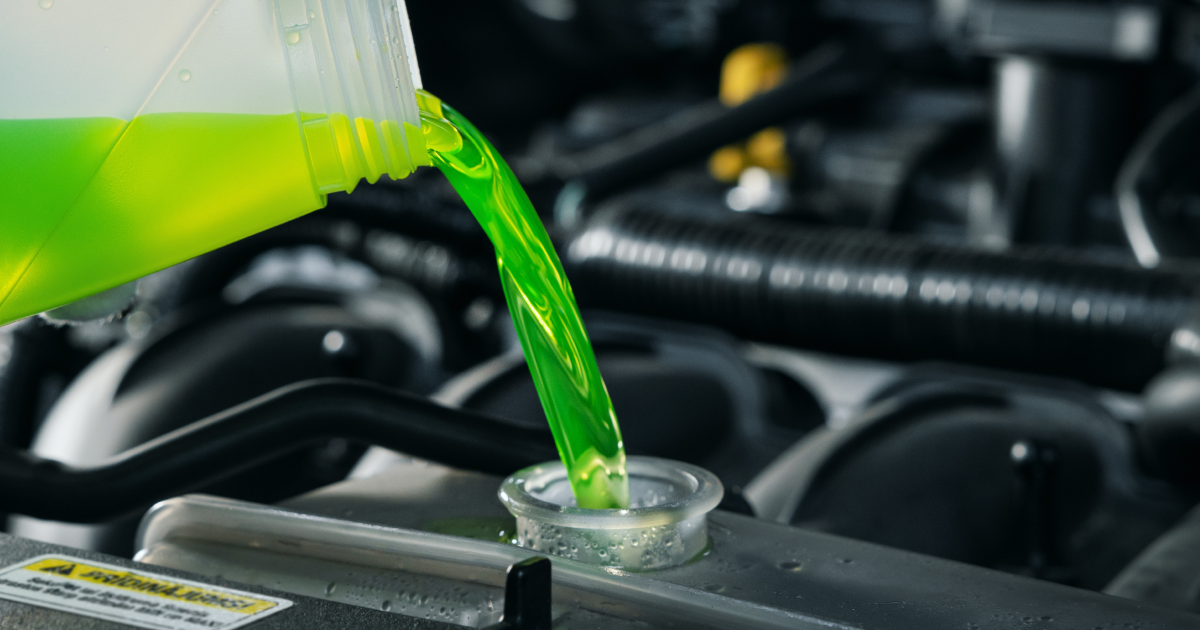
The Fluid You Only Think About When Something Goes Wrong Most car owners treat coolant as a reactive fluid — one you deal with when there's a leak or an overheating problem. This mental model costs money over time in premature water pump failures, corroded heater cores, degraded radiators, and thermostats slow-cooked into failure by acidic coolant. Coolant is not a set-and-forget fluid, and the reason requires understanding what it actually does. What Coolant Actually Does Ethylene glycol-based coolant handles four jobs simultaneously: temperature transfer, freeze protection, boil-over protection, and corrosion inhibition. The first three are relatively stable. The fourth — corrosion inhibition — degrades over time, and its degradation is the root cause of most coolant-related component failures customers attribute to 'bad luck' or 'the car just getting old.' The Chemistry of Degradation New coolant contains a package of corrosion inhibitors that coat metal surfaces and prevent the electrochemical reactions that cause corrosion. These inhibitors are consumed as they do their job. As they deplete, the coolant's pH — which should be mildly alkaline, around 8–10 — drifts toward neutral and eventually toward acidic. Acidic coolant slowly etches aluminum cylinder head surfaces, attacks the radiator core, degrades the heater core, and attacks rubber seals. None of this is immediately dramatic — it happens over tens of thousands of miles. The first signs are usually a water pump that fails early, or a heater core that starts weeping. How to Test Coolant Correctly Visual inspection of coolant color is not reliable. OAT coolant — the orange/red/yellow variety in most modern vehicles — stays visually clean long after its inhibitor package has depleted. The correct test is pH measurement using coolant test strips or a refractometer. A pH below 7.5 indicates inhibitor depletion. Below 7.0 indicates actively acidic coolant causing ongoing damage. This test takes about 30 seconds at any service visit. Why Coolant Types Can't Be Mixed IAT (green) — traditional, used in older vehicles, 2-year/30,000-mile service interval OAT (orange, red, or pink) — used in many GM, Chrysler, and European vehicles HOAT (yellow or gold) — used in many Ford, Chrysler, and Asian vehicles Mixing coolant types neutralizes the inhibitor packages and can accelerate the corrosion they're designed to prevent. Adding the wrong type to top off a low system is a common mistake with chemistry consequences that develop over months. When Coolant Should Actually Be Serviced Most modern OAT coolants: every 5 years or 100,000–150,000 miles. IAT in older vehicles: every 2 years or 30,000 miles. More importantly, pH testing should be part of every major service interval — if the pH is dropping, service before the manufacturer's interval. The chemistry tells you what the mileage can't. Frequently Asked Questions My coolant looks clean and the engine doesn't overheat. Does it still need service? Yes, potentially. An overheating problem means the system has already failed in some way. The goal of proper coolant maintenance is preventing the component failures that lead to overheating in the first place. Does coolant affect heater performance? Significantly. Degraded coolant deposits scale and corrosion in the heater core's small passages, reducing flow and therefore heat output. A heater that's progressively gotten less effective over several winters may be showing the downstream effect of neglected coolant service. The Bottom Line Coolant is a consumable with a chemistry shelf life. Managing it proactively — testing pH at service intervals, replacing on schedule with the correct type — protects the water pump, radiator, and heater core from premature failure. We test coolant pH as part of our multi-point inspection. If yours is getting acidic, we'll tell you before it becomes a component failure.
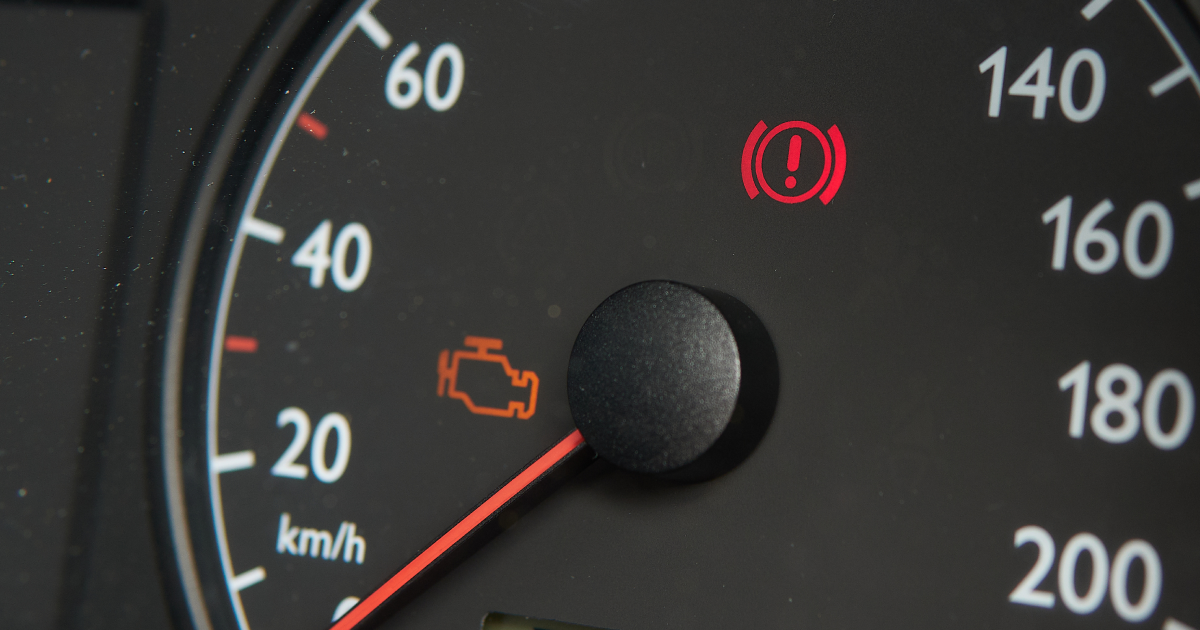
Your Car Is Losing Money at Every Fill-Up Your check engine light is off. Your car starts fine, drives fine, passes inspection. But fuel economy has quietly dropped 15–20% from what it used to be. In many cases, the real culprit is a sensor that is working — technically — but has degraded enough to feed the engine control module inaccurate information. The ECM compensates as best it can, but an engine running slightly off its optimal air-fuel ratio costs real money at every fill-up. The Sensors Most Often Responsible Mass Airflow Sensor (MAF) The MAF measures the volume and density of air entering the engine. A clean MAF is foundational to fuel economy. As a film of oil vapor and contaminants builds on the sensing element, readings become slightly low — the ECM injects less fuel, oxygen sensors compensate, but never as efficiently as accurate MAF data allows. A contaminated MAF often doesn't set a code; its readings are just consistently 5–10% off. MAF sensors can often be cleaned with a $10 can of MAF cleaner rather than replaced. Oxygen Sensors (O2 Sensors) O2 sensors degrade over time, developing a slow, sluggish response pattern instead of rapidly toggling between rich and lean. The ECM can't correct fuel delivery as precisely, and efficiency drops. Most manufacturers recommend O2 sensor replacement every 60,000–100,000 miles regardless of codes because of this gradual degradation pattern. Coolant Temperature Sensor (CTS) A CTS that reads 10–15 degrees low — staying within an acceptable range without setting a code — tells the ECM the engine is cooler than it actually is. The ECM runs a richer cold-start mixture continuously. The result is measurably worse fuel economy and increased carbon buildup, with no warning light to prompt action. How to Diagnose Degraded Sensors The key tool isn't the code reader — it's the live data stream. A technician watching real-time sensor behavior can identify degradation that falls within an 'acceptable' range on a code scan. Key indicators: MAF output in grams per second vs. expected values at various RPMs O2 sensor switching frequency — how many times per second it crosses the rich/lean threshold Short-term and long-term fuel trim values — readings above +5% or below -5% indicate compensation CTS reading compared to actual coolant temperature with an infrared thermometer What This Costs in Real Numbers A vehicle rated 28 mpg that drops to 24 mpg uses roughly 89 additional gallons per year. At $3.50/gallon, that's over $310 annually. A MAF cleaning costs $15–$20 in labor. An O2 sensor replacement runs $80–$150. The math on addressing degraded sensors is almost always favorable. Frequently Asked Questions If fuel economy is down, is it always a sensor problem? Not always. Underinflated tires, dragging brake calipers, a clogged air filter, and dirty injectors are other common causes. Sensors are one significant cause — a proper diagnosis rules out the others. My car passed emissions. Does that mean my sensors are fine? Emissions tests check whether emissions are within legal limits — not whether sensors are operating at optimal efficiency. A vehicle can pass emissions with sensors that are meaningfully underperforming. The Takeaway Sensors are wear items, just like brake pads. They degrade gradually and silently, and the primary symptom is fuel economy loss rather than a warning light. If your mileage isn't what it used to be, have sensor performance evaluated — not just scanned for codes. At Quality Auto Repair & Auto Sales, fuel economy analysis is part of how we think about vehicle health.

At Quality Auto Repair & Auto Sales, we offer in-house ADAS calibration. When a repair requires it, we do it — and we document it.

At Quality Auto Repair & Auto Sales, we check fluid condition before recommending any transmission service. We'll tell you what your vehicle actually needs.
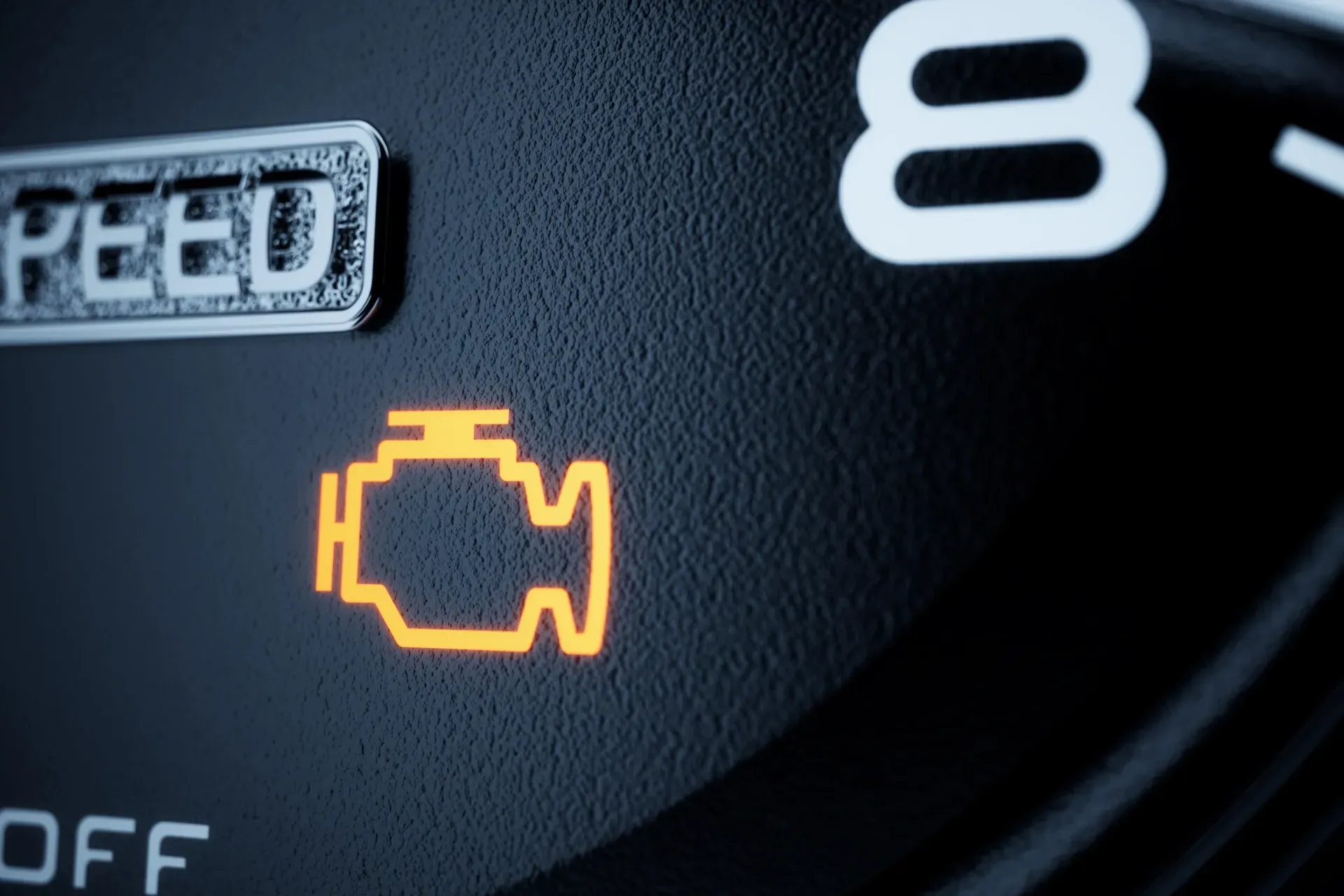
The Light That Comes and Goes The check engine light comes on during your commute. You pull over, check everything visible — nothing obvious. You drive home. The next morning, you start the car and the light is gone. You take the car to a shop anyway. The technician plugs in a scanner. No codes. The computer shows nothing wrong. The technician explains there are no current faults and suggests you come back if it returns. Three weeks later, it's back . And you're in the same situation. This is the maddening reality of intermittent faults — what technicians sometimes call 'ghost codes.' They're not a sign that your car is haunted. They're a sign that something is failing in a way that hasn't become consistent yet. And how a shop handles them reveals more about their diagnostic competence than almost any other scenario. Why Codes Appear and Disappear To understand intermittent faults, it helps to understand how a diagnostic trouble code is actually generated. Modern vehicles have a network of sensors monitoring hundreds of parameters. The engine control module (ECM) — or whichever module governs the affected system — is continuously comparing what sensors report against expected values. When a reading falls outside an acceptable range, the module notes it. But most modules don't immediately set a permanent fault code from a single event. They require the fault to occur a certain number of times, or to persist for a minimum duration, before storing a code and illuminating the check engine light. This is intentional — it filters out momentary glitches. When the fault happens intermittently and the vehicle is driven enough times without a recurrence, the module's 'pending fault' counter can reset — and the code disappears without ever becoming permanent. What Leaves a Trail Even when a code isn't currently set, a thorough diagnostic process can find its footprints. Most modern modules store 'freeze frame data' — a snapshot of operating conditions at the moment a fault was recorded. They also store a history of recent fault codes that have since cleared themselves. A technician who knows to look at Mode 6 OBD data, stored freeze frames, and module history — rather than just current codes — can often find evidence of a fault that no longer appears active. This is the difference between a diagnostic process and a code pull. The Science Behind Common Intermittent Faults Misfire Codes (P0300 Series) Intermittent misfires are among the most common ghost codes, and among the most frequently misdiagnosed. A P0301 (cylinder 1 misfire detected) that appears under certain conditions and clears itself could stem from: - A failing ignition coil that breaks down under heat or load but works fine cold - A partially fouled fuel injector that clears itself after extended highway driving - A vacuum leak that only opens when the intake manifold expands at operating temperature - A failing crankshaft position sensor with an intermittent signal dropout - Carbon buildup on intake valves causing inconsistent fuel atomization Replace the spark plug on that cylinder because it seemed like the obvious answer, and you may have spent $30 on a plug that didn't need replacement while the real problem remains. Sensor Faults and Wiring Issues Temperature-sensitive wiring problems are a classic source of ghost codes. A wire that has a small break or a connector with corrosion may function normally when cold and create an open circuit when the harness expands with heat — or vice versa. The fault appears at operating temperature, disappears when the engine cools, and leaves technicians chasing a symptom that isn't present when they're looking for it. Network Communication Faults In vehicles with multiple ECUs communicating over a CAN bus network, intermittent faults can appear in one module because another module sent a garbled message — not because the module reporting the fault has any problem at all. Diagnosing this requires network-level analysis, not single-system code reading. Why Parts-Replacing Is Expensive and Usually Wrong There's a pattern that plays out in repair shops more often than it should. A fault code points toward a system. The most common cause of that code in that vehicle is a specific part. The part is replaced. The code returns. Another part is replaced. Repeat. This is not diagnosis. It's expensive guessing. And customers often don't realize they're paying for a guessing process until they've replaced several parts and still have the original problem. A Real-World Example A customer brings in a vehicle with an intermittent oxygen sensor code on bank 1. The shop replaces the upstream O2 sensor — the most common cause of that code. The code returns two weeks later. Now the downstream sensor is replaced. The code returns again. A proper diagnostic at this point would involve looking at the fuel trim data, which shows the engine is consistently running rich. That leads to testing the fuel pressure, which reveals a leaking fuel injector. The oxygen sensors were reporting a real problem — they just weren't the cause of it. Two sensors replaced unnecessarily. Hundreds of dollars. And the original problem remains until someone actually diagnoses it. What Proper Diagnostic Methodology Looks Like A rigorous approach to intermittent faults follows a sequence that most good shops use instinctively: Document everything the customer experienced — conditions, frequency, duration, any associated symptoms like sounds or smells Pull all stored codes including history codes and freeze frame data Review live data for anything operating near the edge of acceptable parameters Attempt to reproduce the fault condition under similar operating conditions Use oscilloscope or advanced data logging when the fault cannot be reproduced live Test components under the conditions where the fault occurs, not just at rest The last point is critical. Testing a coil pack at room temperature in a shop tells you almost nothing about whether it will fail at operating temperature on the highway. Testing procedures that match the fault conditions are what separate diagnostic technicians from parts replacers. Frequently Asked Questions If there are no codes, does that mean nothing is wrong? No. Codes are generated by the vehicle's self-monitoring systems, which have limits. Certain types of faults — particularly early-stage component degradation, wiring issues, and some mechanical problems — may not set codes until they become severe. A good technician uses codes as one input, not the only input. Should I drive the car if the check engine light comes on and then goes off? It depends. A solid check engine light that turns off on its own often indicates a fault that resolved temporarily — worth investigating. A flashing check engine light at any point is a different situation and indicates a severe enough fault that you should reduce speed and have the car checked immediately, as it typically indicates an active misfire that can damage the catalytic converter. How do I know if a shop is properly diagnosing my car vs. guessing? Ask them to explain, in plain language, what they found, what their theory of the fault is, and what test confirmed that theory. A shop doing proper diagnosis can answer all three. A shop guessing will often say something like 'this code usually means X' without being able to tell you what test confirmed it. Is there a way to capture an intermittent fault in real time? Yes. Some diagnostic platforms allow data logging that records all sensor values continuously, so if a fault occurs during driving, the log captures what was happening when it appeared. This is one of the most valuable tools for chasing intermittent issues. Ask your shop if they have this capability. The Takeaway Ghost codes are frustrating for everyone. They're frustrating for you because your car has an obvious problem that isn't being found. They're frustrating for honest technicians because the evidence is inconsistent and reproducing the fault takes time. What separates a good diagnostic experience from a bad one isn't whether the fault is easy to find. It's whether the shop is willing to invest the proper time in finding it, use the right tools to capture it, and resist the temptation to replace parts before they have a real answer. We believe in diagnosing first and replacing parts second. If your car has a fault that other shops haven't been able to nail down, bring it to us. Intermittent problems are our specialty.