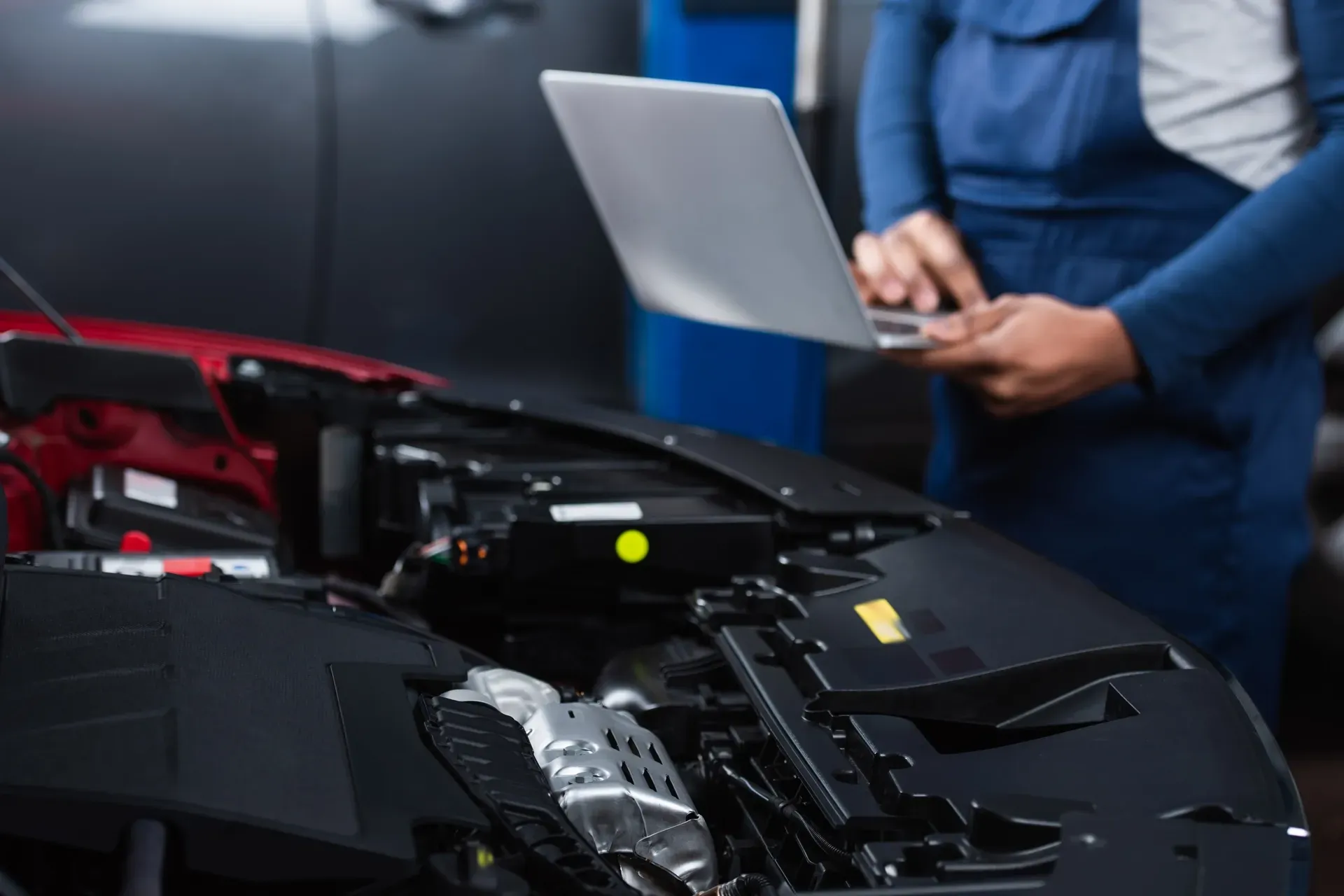
Your Car Is a Network. Treat It Like One. There's a mental model that most people — and honestly, a lot of older-school technicians — still use when thinking about car problems. A part fails. A sensor reads the failure. A code is set. You replace the part. That model made sense for vehicles with a handful of electronic systems loosely connected by simple wiring. It doesn't make sense for a 2022 vehicle with 80 electronic control units all talking to each other simultaneously over multiple communication networks. Understanding CAN bus diagnostics isn't just an academic exercise. It is increasingly the difference between finding the real cause of a problem and spending hours chasing symptoms while the actual fault sits quietly in a network error log. What CAN Bus Actually Is CAN stands for Controller Area Network. It is a communication standard developed by Bosch in the 1980s that became the dominant networking protocol for automotive electronics and has been required in all US vehicles since 2008. The basic idea is elegant: instead of running a dedicated wire from every sensor and actuator to a central computer, CAN allows multiple electronic modules to communicate over a shared two-wire bus. Each module can send and receive messages. Each message has an identifier that tells other modules whether it's relevant to them. Think of it like a group text message. Every module on the bus 'sees' every message, but each module only responds to the messages that matter to its function. A Simple Example When you press the brake pedal, the brake pedal position sensor sends a message on the CAN bus. The engine control module reads it and adjusts fuel delivery. The transmission control module reads it and prepares for a downshift. The stability control module reads it. The instrument cluster reads it and prepares to illuminate a brake light. All of this happens in milliseconds over the same two wires. Now imagine a fault on those two wires. Or a module that's sending malformed messages. Every system that depends on brake pedal information can start behaving incorrectly — and the codes generated might appear in five different modules, each of which is actually fine. The problem is the network, not the modules. The Layers: CAN, LIN, and Now Automotive Ethernet CAN isn't the only network in a modern vehicle. Different systems use different protocols depending on the speed and volume of data they need to handle. CAN Bus The workhorse. Two speeds: high-speed CAN (up to 1 Mb/s) handles powertrain and chassis systems where timing is critical. Lower-speed CAN handles body systems like windows, mirrors, and seat controls where latency isn't as critical. Most modern vehicles have multiple CAN networks running simultaneously. LIN Bus Local Interconnect Network is simpler and slower than CAN, used for systems that don't need high-speed communication — steering column controls, individual seat adjustment motors, some sensor clusters. LIN devices report to a 'master' module that speaks CAN, so they're often invisible to a scanner that's only looking at the CAN network. Automotive Ethernet Increasingly common in high-end and newer vehicles for systems that need very high bandwidth — cameras, radar, LiDAR in ADAS-equipped vehicles, infotainment systems with large data throughput. Automotive Ethernet can handle hundreds of megabits per second. Diagnosing faults on these networks requires equipment and knowledge that most shops don't yet have, but it's coming fast. How CAN Bus Faults Actually Manifest This is where it gets practically important for both technicians and car owners. A CAN bus fault rarely looks like a CAN bus fault from the outside. What you see instead are: Multiple unrelated codes across different systems simultaneously Modules that 'wake up' intermittently or not at all Complete loss of communication with a module that tests fine when disconnected and bench-tested Bizarre or erratic behavior in multiple unrelated systems at the same time A module that works correctly alone but fails when connected to the vehicle network The Termination Resistor Problem CAN bus networks require termination resistors at each end of the bus to prevent signal reflection — essentially, the electrical equivalent of echo. These resistors are typically 120 ohms each, creating a parallel resistance of 60 ohms across the network. A technician who knows to measure the resistance between the CAN high and CAN low wires at the OBD-II port can quickly determine whether both terminators are present and healthy. A reading of 120 ohms instead of 60 means one terminator is missing or open. A reading far from 60 means a short or additional resistance somewhere on the bus. This simple test takes about 30 seconds with a multimeter. It can immediately determine whether the CAN bus itself is healthy — before spending hours chasing module faults. Network-Level vs. Module-Level Diagnostics Traditional diagnostic thinking is module-centric: identify which module set the code, test that module, replace if faulty. Network-level diagnostic thinking is topology-centric: map how the modules communicate, test the health of the communication pathways, then look at individual modules. The difference matters because: A healthy module on a sick network looks like a sick module Replacing modules that aren't actually failed is expensive and often doesn't fix the problem Network faults — shorts, opens, interference — are often cheaper to repair than the modules they mimic Tools That Enable Network Diagnostics Oscilloscopes — specifically, good digital storage oscilloscopes — are the primary tool for CAN bus analysis. The CAN waveform has specific voltage levels, timing characteristics, and bit patterns that reveal network health at a level no scan tool can show. A scope can identify whether: Signal voltage levels are within spec Rise and fall times are correct (indicating proper termination) Bit timing errors are present Specific nodes are dominating the bus (a sign of a module in error mode) Good scan tools can also show network communication in real time — listing which modules are online, which aren't responding, and any communication errors being logged. This network map is often the fastest way to identify where a CAN bus problem actually lives. What This Means for You as a Customer You don't need to understand CAN bus architecture to care about whether your shop does. Here's a simple test: if your car has multiple fault codes across unrelated systems, or if a problem keeps returning despite module replacements, ask your shop whether they've tested the communication network rather than individual components. A shop with network-level diagnostic capability will know immediately what you're asking about. A shop without it may look puzzled — which tells you something important about where your repair money is about to go. Frequently Asked Questions Does every car have a CAN bus? All US vehicles from 2008 onward are required to have CAN bus communication for emissions-related systems. Most modern vehicles have expanded this to cover nearly all electronic systems. Some older vehicles (pre-2008) have earlier communication protocols that function similarly but require different diagnostic approaches. Can a bad battery cause CAN bus problems? Yes, significantly. CAN bus communication depends on stable voltage levels. A weak battery or failing alternator that creates voltage spikes or drops can cause CAN communication errors that generate codes in multiple modules. Checking charging system health is often the first step when multiple unrelated codes appear suddenly. Why would a module 'not be on the network' if it's physically plugged in? A module can be physically connected but not communicating if it has lost power, lost its ground connection, has an internal failure, or is in error mode due to a previous fault. It can also appear to be absent if the wiring between it and the bus has an open circuit even with the connector seated. Is CAN bus the same thing as OBD-II? No. OBD-II is a diagnostic access standard that defines what data must be available and how to access it. CAN bus is one of the physical communication protocols used to carry that data. OBD-II access happens over CAN on most modern vehicles, but they're separate things. The Bottom Line Vehicles have been rolling networks for years, but the diagnostic industry has been slower to adopt truly network-level thinking than the vehicles themselves have been to implement it. The shops that understand this — that have oscilloscopes, trained technicians, and the discipline to test the network before chasing individual modules — are the shops that will solve the problems others can't. We've made that investment because we believe our customers deserve it. If your car has confounded other shops, the answer might not be in any individual module — it might be in the network connecting all of them.

The False Confidence of a Clean Report 'Clean CarFax.' It's one of the most reassuring phrases in a used car listing. It implies a straightforward history — no accidents, no flood damage, no salvage title. Buyers see it and exhale. The problem is what 'clean CarFax' actually means: no reported accidents or incidents captured by the specific data sources CarFax licenses. It does not mean no accidents. It does not mean the vehicle is in good condition. How Vehicle History Reports Work — and Where They Break Down CarFax and AutoCheck aggregate data from insurance records, DMV title records, auction records, dealer service records, and police reports. When data flows correctly from these sources to the VIN, the report is informative. The gaps are significant: Private Party Accidents When two individuals handle an accident directly without filing an insurance claim — common in minor fender benders — no insurance record is created and nothing appears in any history report. Industry estimates suggest 20–35% of accidents are handled this way. Every one is invisible to CarFax. Code Clearing Before Sale Vehicle history reports don't capture what's in a vehicle's computer. A seller who clears fault codes the day before listing creates no record of what existed. This is completely undetectable from a history report. Deferred Maintenance Nothing about maintenance history appears in a vehicle history report unless performed at a dealer who submits records — which is voluntary and inconsistent. A vehicle with every oil change done at an independent shop, by the owner, or not at all will show identical history results. What Actually Reveals Vehicle History Physical Evidence of Collision Repair A trained technician can identify prior collision repair that didn't make any database. Paint overspray, uneven body panel gaps, mismatched paint texture, replaced panels with slightly different sheen, new welds in areas that shouldn't have them — these tell the story the report missed. This is skill-based, not database-based. OBD Readiness Monitor Status Multiple incomplete readiness monitors at purchase time warrant investigation — it suggests codes may have been recently cleared. It doesn't prove problems, but it's a reason to ask questions. Fluid Condition What the oil looks like, what the coolant pH is, what the transmission fluid smells like — these tell you more about actual maintenance history than any service record. A vehicle with 60,000 miles and black, sludgy oil has not been cared for, regardless of what the history report shows. The Odometer Problem Electronic odometers are harder to tamper with than mechanical ones, but odometer fraud hasn't been eliminated. Physical wear indicators — seat bolster wear, steering wheel surface, pedal rubber condition, door panel wear — tell you how many miles a vehicle has actually seen in a way an odometer reading alone cannot. The Washed Title Problem Salvage titles show up reliably in history reports. Washed titles — created by moving a salvage vehicle through a state that doesn't track salvage history — do not. These vehicles look clean in a report. They're not. Physical inspection of frame structure, repair evidence, and panel gaps are the detection tools a history report can't replace. Frequently Asked Questions If CarFax is so limited, why do dealers emphasize it so much? Because it's a positive-sounding credential that satisfies buyer psychology and is easy to obtain. A clean CarFax is a marketing statement, not a mechanical guarantee. Dealers know this. Most buyers don't. Can I check if a VIN has been reported stolen? Yes. NICB (National Insurance Crime Bureau) offers a free VIN check for theft and salvage records at nicb.org. Worth running on any significant used car purchase in addition to standard history reports. What's the most important thing history reports miss? Evidence of prior accident repair — particularly structural repair — that didn't generate an insurance record. Uneven panel gaps, mismatched paint texture, evidence of non-factory welding, and replaced panels that aren't quite factory fit are what experienced technicians find during a pre-purchase inspection that no database can catch.

Missouri winters attack your car in ways you don't notice until they matter. At Quality Auto Repair & Auto Sales, we include an underbody inspection as part of our multi-point check at every service visit.