

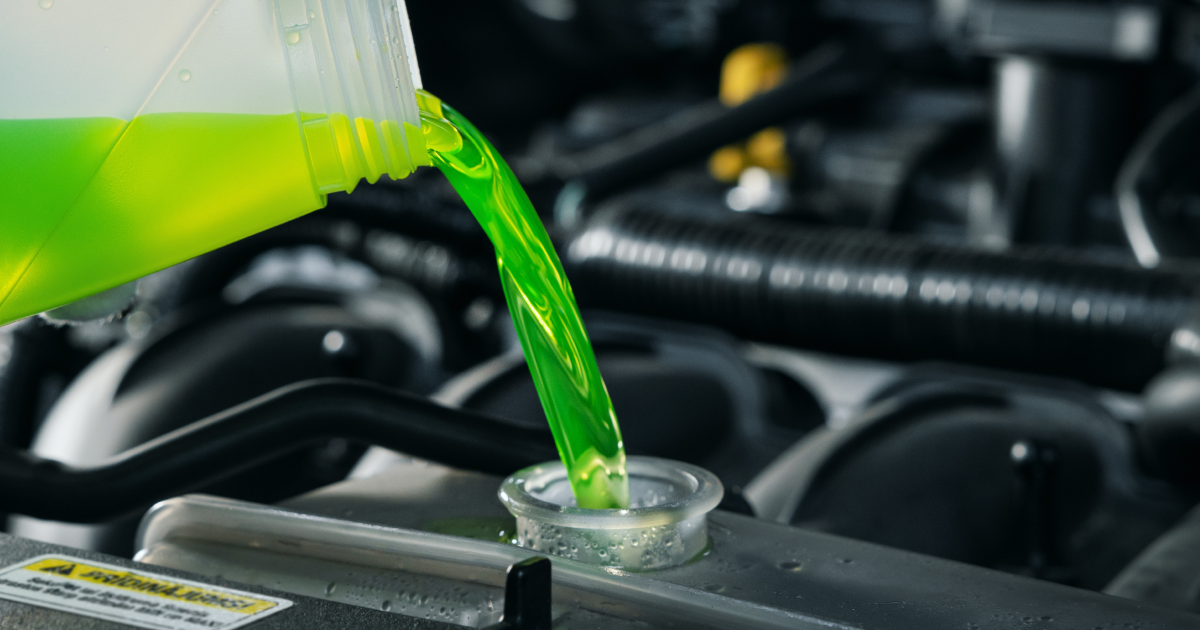
The Fluid You Only Think About When Something Goes Wrong Most car owners treat coolant as a reactive fluid — one you deal with when there's a leak or an overheating problem. This mental model costs money over time in premature water pump failures, corroded heater cores, degraded radiators, and thermostats slow-cooked into failure by acidic coolant. Coolant is not a set-and-forget fluid, and the reason requires understanding what it actually does. What Coolant Actually Does Ethylene glycol-based coolant handles four jobs simultaneously: temperature transfer, freeze protection, boil-over protection, and corrosion inhibition. The first three are relatively stable. The fourth — corrosion inhibition — degrades over time, and its degradation is the root cause of most coolant-related component failures customers attribute to 'bad luck' or 'the car just getting old.' The Chemistry of Degradation New coolant contains a package of corrosion inhibitors that coat metal surfaces and prevent the electrochemical reactions that cause corrosion. These inhibitors are consumed as they do their job. As they deplete, the coolant's pH — which should be mildly alkaline, around 8–10 — drifts toward neutral and eventually toward acidic. Acidic coolant slowly etches aluminum cylinder head surfaces, attacks the radiator core, degrades the heater core, and attacks rubber seals. None of this is immediately dramatic — it happens over tens of thousands of miles. The first signs are usually a water pump that fails early, or a heater core that starts weeping. How to Test Coolant Correctly Visual inspection of coolant color is not reliable. OAT coolant — the orange/red/yellow variety in most modern vehicles — stays visually clean long after its inhibitor package has depleted. The correct test is pH measurement using coolant test strips or a refractometer. A pH below 7.5 indicates inhibitor depletion. Below 7.0 indicates actively acidic coolant causing ongoing damage. This test takes about 30 seconds at any service visit. Why Coolant Types Can't Be Mixed IAT (green) — traditional, used in older vehicles, 2-year/30,000-mile service interval OAT (orange, red, or pink) — used in many GM, Chrysler, and European vehicles HOAT (yellow or gold) — used in many Ford, Chrysler, and Asian vehicles Mixing coolant types neutralizes the inhibitor packages and can accelerate the corrosion they're designed to prevent. Adding the wrong type to top off a low system is a common mistake with chemistry consequences that develop over months. When Coolant Should Actually Be Serviced Most modern OAT coolants: every 5 years or 100,000–150,000 miles. IAT in older vehicles: every 2 years or 30,000 miles. More importantly, pH testing should be part of every major service interval — if the pH is dropping, service before the manufacturer's interval. The chemistry tells you what the mileage can't. Frequently Asked Questions My coolant looks clean and the engine doesn't overheat. Does it still need service? Yes, potentially. An overheating problem means the system has already failed in some way. The goal of proper coolant maintenance is preventing the component failures that lead to overheating in the first place. Does coolant affect heater performance? Significantly. Degraded coolant deposits scale and corrosion in the heater core's small passages, reducing flow and therefore heat output. A heater that's progressively gotten less effective over several winters may be showing the downstream effect of neglected coolant service. The Bottom Line Coolant is a consumable with a chemistry shelf life. Managing it proactively — testing pH at service intervals, replacing on schedule with the correct type — protects the water pump, radiator, and heater core from premature failure. We test coolant pH as part of our multi-point inspection. If yours is getting acidic, we'll tell you before it becomes a component failure.
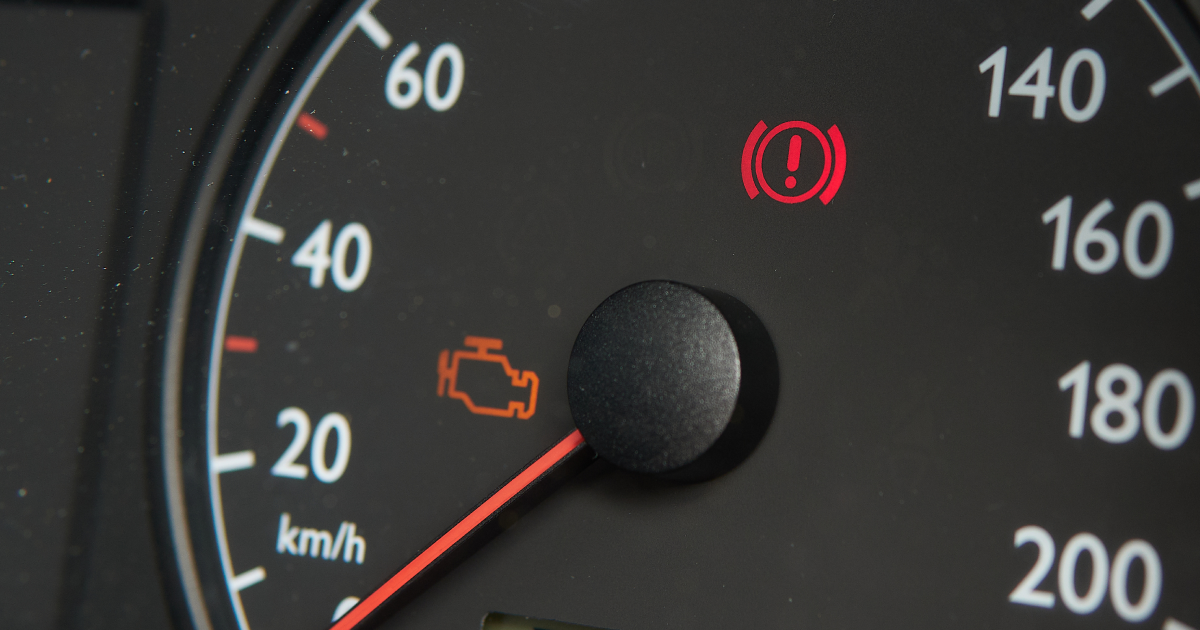
Your Car Is Losing Money at Every Fill-Up Your check engine light is off. Your car starts fine, drives fine, passes inspection. But fuel economy has quietly dropped 15–20% from what it used to be. In many cases, the real culprit is a sensor that is working — technically — but has degraded enough to feed the engine control module inaccurate information. The ECM compensates as best it can, but an engine running slightly off its optimal air-fuel ratio costs real money at every fill-up. The Sensors Most Often Responsible Mass Airflow Sensor (MAF) The MAF measures the volume and density of air entering the engine. A clean MAF is foundational to fuel economy. As a film of oil vapor and contaminants builds on the sensing element, readings become slightly low — the ECM injects less fuel, oxygen sensors compensate, but never as efficiently as accurate MAF data allows. A contaminated MAF often doesn't set a code; its readings are just consistently 5–10% off. MAF sensors can often be cleaned with a $10 can of MAF cleaner rather than replaced. Oxygen Sensors (O2 Sensors) O2 sensors degrade over time, developing a slow, sluggish response pattern instead of rapidly toggling between rich and lean. The ECM can't correct fuel delivery as precisely, and efficiency drops. Most manufacturers recommend O2 sensor replacement every 60,000–100,000 miles regardless of codes because of this gradual degradation pattern. Coolant Temperature Sensor (CTS) A CTS that reads 10–15 degrees low — staying within an acceptable range without setting a code — tells the ECM the engine is cooler than it actually is. The ECM runs a richer cold-start mixture continuously. The result is measurably worse fuel economy and increased carbon buildup, with no warning light to prompt action. How to Diagnose Degraded Sensors The key tool isn't the code reader — it's the live data stream. A technician watching real-time sensor behavior can identify degradation that falls within an 'acceptable' range on a code scan. Key indicators: MAF output in grams per second vs. expected values at various RPMs O2 sensor switching frequency — how many times per second it crosses the rich/lean threshold Short-term and long-term fuel trim values — readings above +5% or below -5% indicate compensation CTS reading compared to actual coolant temperature with an infrared thermometer What This Costs in Real Numbers A vehicle rated 28 mpg that drops to 24 mpg uses roughly 89 additional gallons per year. At $3.50/gallon, that's over $310 annually. A MAF cleaning costs $15–$20 in labor. An O2 sensor replacement runs $80–$150. The math on addressing degraded sensors is almost always favorable. Frequently Asked Questions If fuel economy is down, is it always a sensor problem? Not always. Underinflated tires, dragging brake calipers, a clogged air filter, and dirty injectors are other common causes. Sensors are one significant cause — a proper diagnosis rules out the others. My car passed emissions. Does that mean my sensors are fine? Emissions tests check whether emissions are within legal limits — not whether sensors are operating at optimal efficiency. A vehicle can pass emissions with sensors that are meaningfully underperforming. The Takeaway Sensors are wear items, just like brake pads. They degrade gradually and silently, and the primary symptom is fuel economy loss rather than a warning light. If your mileage isn't what it used to be, have sensor performance evaluated — not just scanned for codes. At Quality Auto Repair & Auto Sales, fuel economy analysis is part of how we think about vehicle health.
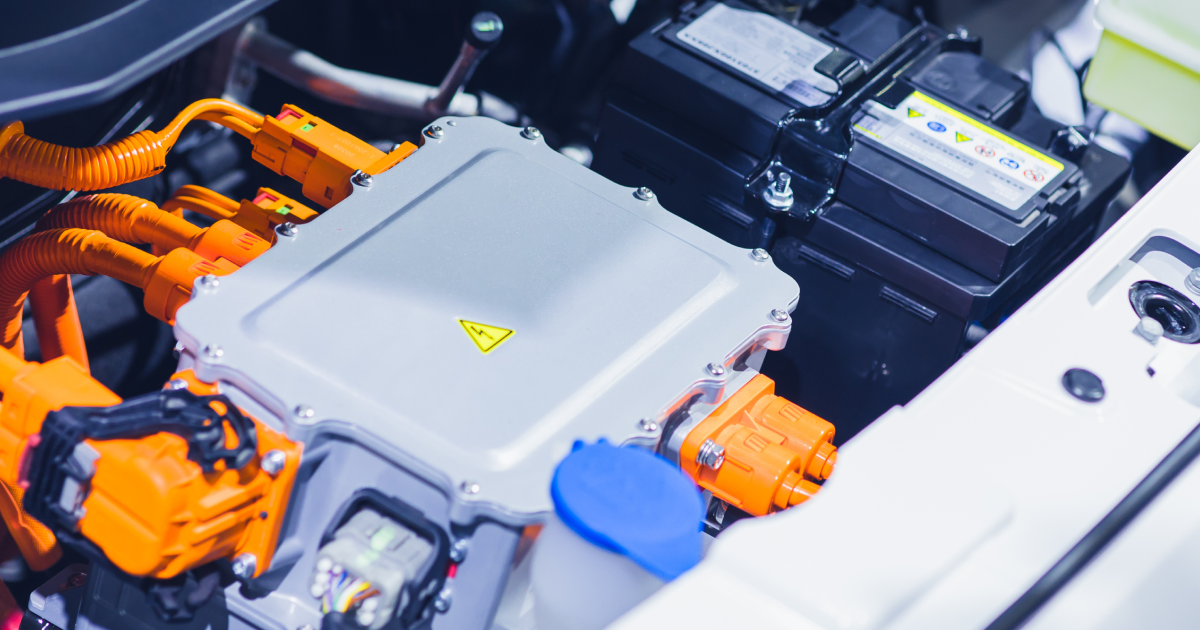
The Promise of Electric Vehicles — and the Catch Nobody Mentions Electric vehicles are sold as the future of transportation. Fewer moving parts. Lower maintenance costs. Better for the environment. All of that may be true. But there's a clause in the fine print that nobody in the showroom brings up: when your EV breaks down outside of warranty, you may have almost no choice about where to get it fixed — or how much you'll pay. The reason is simple and deliberate: EV manufacturers, Tesla most prominently but far from exclusively, have built proprietary diagnostic and repair ecosystems so locked down that independent shops are effectively excluded. And the consequences for consumers are starting to become very real. How ICE Vehicle Repair Access Works — and Why EVs Are Different For internal combustion engine vehicles, a combination of federal mandate and industry standardization has created a relatively open ecosystem. The OBD-II standard means any shop can read basic fault codes. Advanced OEM access is subscription-based but available. Right-to-repair legislation in states like Massachusetts has pushed this further. EVs don't fit neatly into this ecosystem. The OBD-II port exists on most EVs as a hardware interface, but many EV manufacturers have implemented proprietary communication protocols over it that generic scan tools can't interpret. The critical diagnostic data — battery management system status, individual cell voltages, thermal management errors, motor controller faults — is locked behind manufacturer-specific software that isn't available to independent shops at any price. The Tesla Model Tesla's approach is the most discussed, partly because Tesla has the most EVs on the road and partly because it has been the most aggressive about controlling its own service network. Tesla uses a proprietary diagnostic platform called Toolbox that is not available to independent shops. The company has historically argued that its vehicles are too complex and too software-integrated to be safely serviced by anyone outside its own service network. Critics argue the real motivation is revenue: Tesla's service centers are a significant and growing profit center. What this means practically: a Tesla with a battery management system fault, a Motor Control Unit failure, or a software issue that won't resolve itself may be legally repairable only by Tesla — even if the vehicle is five years out of warranty. Rivian, Lucid, and the Newer Players Tesla's model has influenced every EV startup that followed. Rivian, Lucid, and others have built similarly closed service ecosystems. The difference is scale — there are far fewer Rivians and Lucids on the road, so the problem is less visible. But as these vehicles age out of warranty, the issue will intensify. The practical problem is geographic as much as anything. Tesla has service centers in major metropolitan areas. In rural regions and smaller cities, the nearest Tesla service center may be hundreds of miles away. For an EV that can't be driven because of a software fault, that means a flatbed tow for hundreds of miles — at the owner's expense. What Happens to Out-of-Warranty EV Owners Right Now This is not a theoretical future problem. It is happening today. EV owners outside warranty report waits of weeks or months for service appointments at manufacturer service centers. Remote diagnostics — where Tesla or another manufacturer pushes a software fix over the air — work for some issues but not hardware faults. And when the repair requires physical access to the vehicle's proprietary systems, independent shops can only do so much. A Real-World Scenario An EV owner gets a battery fault warning that limits the vehicle to a reduced power mode. The vehicle is four years old and out of the manufacturer's powertrain warranty. The nearest manufacturer service center is 200 miles away with a three-week appointment backlog. An independent shop can read some basic codes but cannot access the battery management diagnostic data needed to determine whether this is a software calibration issue, a bad cell module, or a full pack replacement situation. The owner is effectively stuck. This scenario is common enough that online EV communities are full of it. What the Independent Repair Industry Is Doing to Fight Back The independent repair industry is not accepting this quietly. Right to Repair Efforts The Alliance for Automotive Innovation and major independent repair trade groups have been in ongoing conflict over EV access. Massachusetts's right-to-repair law, which voters expanded in 2020, specifically addresses telematics data access. The automotive industry has resisted implementation, and the legal battle continues. At the federal level, the FTC has indicated that exclusive repair arrangements may violate antitrust principles, though enforcement has been inconsistent. Aftermarket Tool Development Companies like Autel, Snap-on, and several EV-focused startups are developing tools that can access more EV systems than generic scanners. The progress is real but uneven — Tesla in particular has been aggressive about changing communication protocols in ways that break third-party tools. Independent Specialists A cottage industry of EV specialists — shops that focus exclusively on specific makes and have reverse-engineered access to diagnostic systems or developed relationships with parts suppliers who have better access than the public — is emerging. This is not a scalable solution, but it is the current reality for many out-of-warranty EV owners. What Consumers Should Demand If you own or are considering an EV, these are the questions worth asking: What is the manufacturer's policy on independent repair access? Can independent shops access diagnostic data for my vehicle? What happens to service access when the warranty expires? How far is the nearest manufacturer service center, and what are typical wait times? Does the manufacturer offer any remote diagnostic capability, and what does that cost? The answers will vary by manufacturer and will tell you a lot about your long-term cost of ownership. Frequently Asked Questions Can independent shops do any EV work at all? Yes — substantial work. Brake systems, suspension, tires, HVAC, many electrical accessories, and some powertrain components can be addressed by well-equipped independent shops. The gap is in deep powertrain and battery management diagnostics, which are the most proprietary systems. Is this different from how luxury ICE brands like BMW or Mercedes handle diagnostics? Somewhat. BMW and Mercedes also have proprietary diagnostic tools with dealer-centric access, but independent subscription access exists and aftermarket tools like ISTA and Xentry can be obtained. EV manufacturers have been more aggressive about preventing any third-party access to their battery management systems specifically. Will this get better or worse over time? The political and legal pressure is pushing toward more access, but manufacturers are simultaneously lobbying hard against it. The near-term trajectory is uncertain. Consumers who support right-to-repair legislation are directly supporting their own future repair options. What about used EVs? Is repair access a bigger concern? Significantly bigger. A used EV is likely out of warranty. The manufacturer has less incentive to provide easy service access. Parts availability for aging EV platforms is an emerging concern — particularly for brands that may not survive long-term. Battery pack availability for early-generation EVs is already becoming difficult. The Bigger Picture The EV diagnostic access problem is, at its core, a consumer rights problem dressed up in technology language. The argument that proprietary repair restrictions protect safety is largely pretextual — the same safety arguments were made about ICE vehicles, and the right-to-repair ecosystem for those vehicles has not produced a safety crisis. What proprietary EV diagnostics do produce is captive customers, reduced competition in repair markets, and higher long-term costs of ownership than the sticker price reflects. These are costs worth factoring in when you're deciding what to buy. Independent shops like ours are investing in EV capability because we believe our customers deserve a choice. We're not there yet for every EV system, and we'll always be transparent about what we can and can't do. But we're fighting for the right to be an option — because you should have one.