

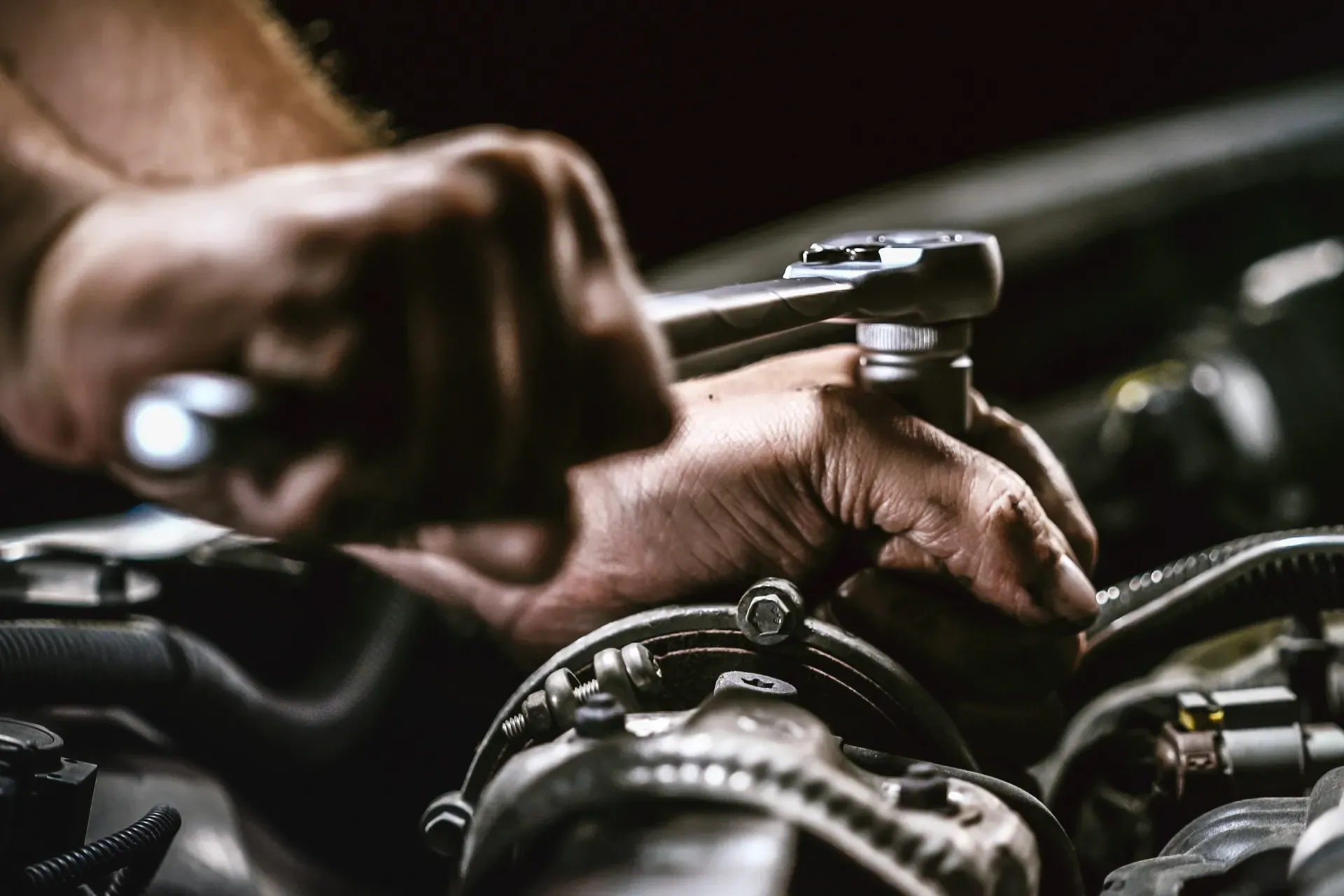
Major engine repairs are some of the most expensive problems a driver can face—but the good news is that many of them are completely preventable. Routine auto services play a critical role in keeping your engine healthy, efficient, and reliable. For drivers in Maryland Heights and throughout St. Louis, daily commuting, stop-and-go traffic, extreme temperatures, and rough road conditions place added stress on engines. Staying consistent with preventive services is the best way to avoid breakdowns and extend the life of your vehicle. Here are the routine auto services that matter most when it comes to preventing serious engine damage. 1. Regular Oil Changes Oil changes are the foundation of engine health. Clean oil lubricates internal components, reduces friction, and carries heat away from critical engine parts. Without regular oil changes, engines can suffer from: Excessive wear Overheating Sludge buildup Internal engine damage Skipping oil changes is one of the fastest ways to shorten engine life. 2. Cooling System Inspections Engines generate extreme heat, and the cooling system keeps temperatures under control. Routine inspections help identify issues before overheating occurs. Key components checked include: Radiator Hoses and clamps Coolant levels and condition Water pump Thermostat Missouri summer heat makes cooling system maintenance especially important. Overheating can cause warped engine components and blown head gaskets. 3. Air Filter and Fuel System Maintenance Engines need clean air and fuel to run efficiently. Dirty air filters or fuel system issues can lead to poor combustion and engine strain. Routine service helps prevent: Reduced engine performance Poor fuel efficiency Engine misfires Carbon buildup Clean airflow and fuel delivery keep engines running smoothly and efficiently. 4. Spark Plug and Ignition System Service Spark plugs ignite the air-fuel mixture in your engine. Worn plugs or failing ignition components can cause misfires and engine stress. Symptoms of ignition issues include: Rough idling Hesitation during acceleration Decreased fuel economy Replacing worn ignition components prevents misfires that can damage engine internals. 5. Belt and Hose Inspections Belts and hoses play a vital role in engine operation. Over time, they crack, stretch, or weaken—especially in fluctuating St. Louis weather. Routine inspections check for: Cracks or fraying Leaks Loose connections A failed belt or hose can cause immediate engine overheating or shutdown. 6. Engine Diagnostics and Warning Light Checks Dashboard warning lights are early alerts designed to prevent serious damage. Routine diagnostics help identify issues before they escalate. Diagnostics can uncover: Sensor failures Fuel delivery issues Emissions problems Early mechanical wear Ignoring warning lights allows small issues to turn into major repairs. 7. Regular Vehicle Inspections Comprehensive inspections provide a full picture of engine health and overall vehicle condition. Inspections help catch: Oil or coolant leaks Abnormal engine noises Early signs of internal wear Catching problems early keeps repairs affordable and manageable. Why St. Louis Drivers Trust Quality Auto Repair At Quality Auto Repair, we focus on preventing engine problems—not just fixing them after failure. Our routine maintenance services include: Oil changes and fluid services Cooling system inspections Engine diagnostics Belt, hose, and ignition checks Honest recommendations Transparent pricing We proudly serve Maryland Heights, St. Louis County, Bridgeton, Creve Coeur, Hazelwood, Westport, and nearby communities. Frequently Asked Questions How often should routine engine services be performed? Most vehicles benefit from service every 5,000–7,500 miles, depending on driving habits and manufacturer guidelines. Can routine maintenance really prevent major engine repairs? Yes. Most engine failures start as minor issues that could have been caught early. Is preventive maintenance expensive? No—routine services cost far less than major engine repairs or replacements. Final Takeaway Major engine problems don't happen overnight—they build over time when routine services are ignored. Consistent maintenance protects your engine, improves performance, and saves you money in the long run. A small investment today can prevent a major repair tomorrow. Call to Action Want to protect your engine and avoid costly repairs? Schedule routine maintenance with Quality Auto Repair and Auto Sales in Maryland Heights, St. Louis today. Reliable service. Honest care. Long-term engine protection you can trust.

Two Lots, Very Differe nt Conversations You've been to three dealerships. Every vehicle came with a laminated sheet of bullet points: 'professionally inspected,' 'dealer certified,' 'like new condition.' Every salesperson had an answer for every question — none of those answers included anything that would give you a reason not to buy. There's a different category of used car purchase most buyers don't think about until someone mentions it: buying directly from a repair shop. What a Repair Shop Knows That a Dealer Doesn't A repair shop selling used vehicles has one significant structural advantage: the people evaluating the vehicles are mechanics, not salespeople. The evaluation isn't a visual walk-around and a test drive. It's a complete mechanical inspection by the people who fix cars for a living — the same technicians looking for brake condition, fluid quality, evidence of leaks, rust on the underbody, electrical irregularities. And a repair shop's reputation depends entirely on the quality of its work. Selling a customer a vehicle with a known problem damages that relationship permanently. The Disclosure Question Ask a dealer what they found during their inspection of a vehicle they're selling. You'll typically get 'it passed our certification process.' Ask a repair shop the same question and you should get an actual answer: what was the brake pad depth, what did the fluids look like, was there any evidence of past repairs. A shop that sells vehicles and values its service reputation will tell you what work was done and what — if anything — was deferred and why. The Commission Dynamic Traditional dealerships operate on commission structures for sales staff. This doesn't mean every dealer is dishonest, but the incentive structure creates pressure to close, which shapes how information is presented. At a repair shop, the person discussing a used vehicle with you isn't working on commission. The conversation is different because the motivations are different. What to Look For in a Shop-Backed Purchase A complete written inspection report for the specific vehicle — not a generic certification Transparency about what was found and what was done Willingness to let you take the vehicle to an independent third party for a pre-purchase inspection Service history if the shop serviced the vehicle before acquiring it The Price Reality Shop-based vehicles are sometimes priced modestly below retail — sometimes at retail. The value proposition isn't necessarily a lower sticker. It's reduced uncertainty about what you're buying. The true cost of a used car purchase includes what you'll spend on it in the first 12 months. A vehicle bought from a source with genuine mechanical transparency is less likely to produce a $1,500 surprise in month three. Frequently Asked Questions Do repair shop used car sales come with warranties? It varies. Some offer limited powertrain warranties. Others sell as-is with full disclosure. As-is with honest disclosure is often preferable to warranty language from a dealer who hasn't been as transparent — knowing the vehicle's actual condition is worth more than warranty exclusions you haven't read yet. What if I want a second opinion on a vehicle from a repair shop? A reputable shop will encourage it. If a shop resists an independent pre-purchase inspection, that resistance is itself diagnostic. The Bottom Line Used car buying is a transaction where information is the most valuable currency. A seller who knows the vehicle mechanically and shares what they know honestly is a fundamentally better buying experience than a polished sales process built around closing. Quality Auto Repair & Auto Sales maintains a selection of used vehicles we've personally inspected and stand behind. We'll tell you what we know — including things a dealer wouldn't mention.
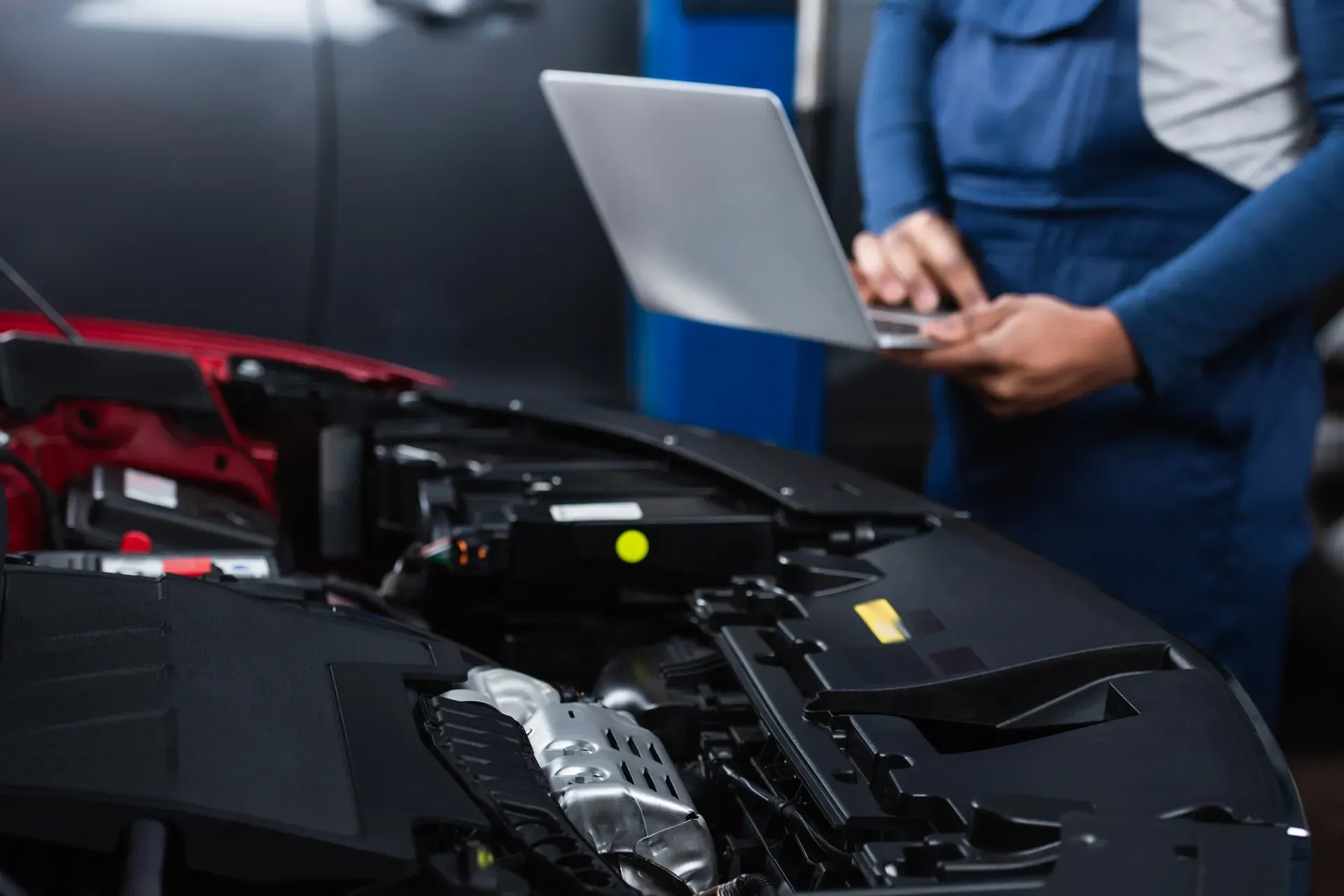
Your Car Is a Network. Treat It Like One. There's a mental model that most people — and honestly, a lot of older-school technicians — still use when thinking about car problems. A part fails. A sensor reads the failure. A code is set. You replace the part. That model made sense for vehicles with a handful of electronic systems loosely connected by simple wiring. It doesn't make sense for a 2022 vehicle with 80 electronic control units all talking to each other simultaneously over multiple communication networks. Understanding CAN bus diagnostics isn't just an academic exercise. It is increasingly the difference between finding the real cause of a problem and spending hours chasing symptoms while the actual fault sits quietly in a network error log. What CAN Bus Actually Is CAN stands for Controller Area Network. It is a communication standard developed by Bosch in the 1980s that became the dominant networking protocol for automotive electronics and has been required in all US vehicles since 2008. The basic idea is elegant: instead of running a dedicated wire from every sensor and actuator to a central computer, CAN allows multiple electronic modules to communicate over a shared two-wire bus. Each module can send and receive messages. Each message has an identifier that tells other modules whether it's relevant to them. Think of it like a group text message. Every module on the bus 'sees' every message, but each module only responds to the messages that matter to its function. A Simple Example When you press the brake pedal, the brake pedal position sensor sends a message on the CAN bus. The engine control module reads it and adjusts fuel delivery. The transmission control module reads it and prepares for a downshift. The stability control module reads it. The instrument cluster reads it and prepares to illuminate a brake light. All of this happens in milliseconds over the same two wires. Now imagine a fault on those two wires. Or a module that's sending malformed messages. Every system that depends on brake pedal information can start behaving incorrectly — and the codes generated might appear in five different modules, each of which is actually fine. The problem is the network, not the modules. The Layers: CAN, LIN, and Now Automotive Ethernet CAN isn't the only network in a modern vehicle. Different systems use different protocols depending on the speed and volume of data they need to handle. CAN Bus The workhorse. Two speeds: high-speed CAN (up to 1 Mb/s) handles powertrain and chassis systems where timing is critical. Lower-speed CAN handles body systems like windows, mirrors, and seat controls where latency isn't as critical. Most modern vehicles have multiple CAN networks running simultaneously. LIN Bus Local Interconnect Network is simpler and slower than CAN, used for systems that don't need high-speed communication — steering column controls, individual seat adjustment motors, some sensor clusters. LIN devices report to a 'master' module that speaks CAN, so they're often invisible to a scanner that's only looking at the CAN network. Automotive Ethernet Increasingly common in high-end and newer vehicles for systems that need very high bandwidth — cameras, radar, LiDAR in ADAS-equipped vehicles, infotainment systems with large data throughput. Automotive Ethernet can handle hundreds of megabits per second. Diagnosing faults on these networks requires equipment and knowledge that most shops don't yet have, but it's coming fast. How CAN Bus Faults Actually Manifest This is where it gets practically important for both technicians and car owners. A CAN bus fault rarely looks like a CAN bus fault from the outside. What you see instead are: Multiple unrelated codes across different systems simultaneously Modules that 'wake up' intermittently or not at all Complete loss of communication with a module that tests fine when disconnected and bench-tested Bizarre or erratic behavior in multiple unrelated systems at the same time A module that works correctly alone but fails when connected to the vehicle network The Termination Resistor Problem CAN bus networks require termination resistors at each end of the bus to prevent signal reflection — essentially, the electrical equivalent of echo. These resistors are typically 120 ohms each, creating a parallel resistance of 60 ohms across the network. A technician who knows to measure the resistance between the CAN high and CAN low wires at the OBD-II port can quickly determine whether both terminators are present and healthy. A reading of 120 ohms instead of 60 means one terminator is missing or open. A reading far from 60 means a short or additional resistance somewhere on the bus. This simple test takes about 30 seconds with a multimeter. It can immediately determine whether the CAN bus itself is healthy — before spending hours chasing module faults. Network-Level vs. Module-Level Diagnostics Traditional diagnostic thinking is module-centric: identify which module set the code, test that module, replace if faulty. Network-level diagnostic thinking is topology-centric: map how the modules communicate, test the health of the communication pathways, then look at individual modules. The difference matters because: A healthy module on a sick network looks like a sick module Replacing modules that aren't actually failed is expensive and often doesn't fix the problem Network faults — shorts, opens, interference — are often cheaper to repair than the modules they mimic Tools That Enable Network Diagnostics Oscilloscopes — specifically, good digital storage oscilloscopes — are the primary tool for CAN bus analysis. The CAN waveform has specific voltage levels, timing characteristics, and bit patterns that reveal network health at a level no scan tool can show. A scope can identify whether: Signal voltage levels are within spec Rise and fall times are correct (indicating proper termination) Bit timing errors are present Specific nodes are dominating the bus (a sign of a module in error mode) Good scan tools can also show network communication in real time — listing which modules are online, which aren't responding, and any communication errors being logged. This network map is often the fastest way to identify where a CAN bus problem actually lives. What This Means for You as a Customer You don't need to understand CAN bus architecture to care about whether your shop does. Here's a simple test: if your car has multiple fault codes across unrelated systems, or if a problem keeps returning despite module replacements, ask your shop whether they've tested the communication network rather than individual components. A shop with network-level diagnostic capability will know immediately what you're asking about. A shop without it may look puzzled — which tells you something important about where your repair money is about to go. Frequently Asked Questions Does every car have a CAN bus? All US vehicles from 2008 onward are required to have CAN bus communication for emissions-related systems. Most modern vehicles have expanded this to cover nearly all electronic systems. Some older vehicles (pre-2008) have earlier communication protocols that function similarly but require different diagnostic approaches. Can a bad battery cause CAN bus problems? Yes, significantly. CAN bus communication depends on stable voltage levels. A weak battery or failing alternator that creates voltage spikes or drops can cause CAN communication errors that generate codes in multiple modules. Checking charging system health is often the first step when multiple unrelated codes appear suddenly. Why would a module 'not be on the network' if it's physically plugged in? A module can be physically connected but not communicating if it has lost power, lost its ground connection, has an internal failure, or is in error mode due to a previous fault. It can also appear to be absent if the wiring between it and the bus has an open circuit even with the connector seated. Is CAN bus the same thing as OBD-II? No. OBD-II is a diagnostic access standard that defines what data must be available and how to access it. CAN bus is one of the physical communication protocols used to carry that data. OBD-II access happens over CAN on most modern vehicles, but they're separate things. The Bottom Line Vehicles have been rolling networks for years, but the diagnostic industry has been slower to adopt truly network-level thinking than the vehicles themselves have been to implement it. The shops that understand this — that have oscilloscopes, trained technicians, and the discipline to test the network before chasing individual modules — are the shops that will solve the problems others can't. We've made that investment because we believe our customers deserve it. If your car has confounded other shops, the answer might not be in any individual module — it might be in the network connecting all of them.

